Showing posts with label China. Show all posts

Friday, April 22, 2011

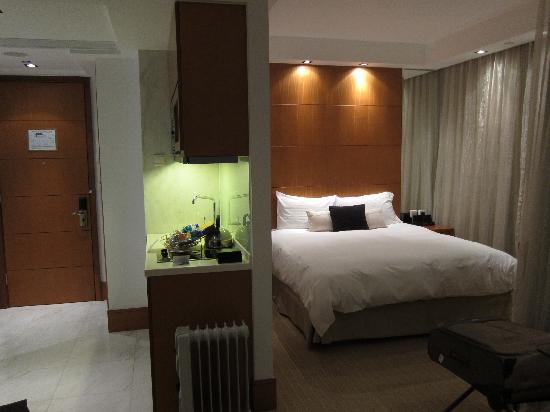
Lanson Place Hotel


Location: 133 Leighton Road, Causeway Bay, Hong KongMTR station – Causeway Bay (three stops from Central).This boutique hotel is about 5 to 10 minutes walk from Causeway Bay MTR station.While adjacent to the Causeway Bay residential area, it is a couple of minutes to walk to the Causeway Bay shopping district.


Hotel Highlights· A fully equipped gym with an inspiring city view· Garden courtyard on the ground floor· Lounge and bar private to guests· Food delivery service· Wireless internet within hotel· 24-hour business centre· From studio to two-bedroom suites available· Contemporary design – view photo gallery


Guestrooms Highlights· Broad band internet access, computer, fax/data line, colour TV, safes and desks· Refrigerator, kitchenette with microwave and cooking utensils, hair dryers, iron & ironing boardSpecial OfferRooms are quite spacious. Minimum 380 sq. ft. for general and 1500-1900 sq. ft. for suites


Remarks Good for business travelers and families who enjoy a calm living environment however with easy access to everywhere. Also ideal for those who enjoy shopping and eating as there are plenty of shops and restaurants around. Corporate guests love this boutique hotel and usually have their thumbs up after staying.


www.lansonplace.com/hk_welcome.php

Sunday, February 27, 2011

High Speed Rail in China


If you travel to China, you will understand sometimes it saves time if you travel by the high speed rail (HSR) in China.

From the map above, the solid red line shows HSR in service, the dotted ones are under-construction, and the blue ones are planned.

Monday, August 16, 2010

Hainan Airlines: from Singapore to Hefei and Dalian

As the 6th Chinese airline in Singapore, Hainan Airlines will operate four weekly flights on a B737-800 aircraft connecting Singapore to Hefei and onwards to Dalian.

Hefei will be a new city link by Hainan Airlines for Changi Airport and brings to four the number of new city links to China established this year, following Jinan, Shantou and Qingdao.


Hefei is the capital of Anhui province. The political, economic and cultural centre of Anhui province, the city of Hefei is located in mid-east China, some 400 km west of Shanghai.
Native Chinese workers and students in students may find it good as now there are more choices flying home with Hainan Airline.

Hainan Airlines

Thursday, December 17, 2009

Cheap Budget Hotel in CHINA

http://www.7daysinn.cn/inn_search.html

Booking is in chinese...

For adventure in Shenzhen

Near 世界之窗
7天深圳世界之窗店 http://www.7daysinn.cn/innpage.php?id=19

Near 老街


7天深圳东门步行街二店http://www.7daysinn.cn/innpage.php?id=311


Near 罗湖口岸 to Hong Kong

7天深圳万象城店http://www.7daysinn.cn/innpage.php?id=191

Which one is the best???

Saturday, September 19, 2009

Top 8 Shanghai Scenic Spots


The new Best Eight, both natural and man-made, represent Shanghai’s culture, history and development. They were picked by more than 33,700 people from all walks of life.

More than 300 scenic areas were recommended. The administration released a bilingual book last month to introduce the eight spots and 100 other candidates that did not make the final cut.

1. The morning bell of the Bund (wai tan chen zhong外滩晨钟)
2. The refined rhythm of Yuyuan Garden (yu yuan ya yun豫园雅韵)
3. The new splendor of the old Shikumen (jiu li xin hui旧里新辉)
4. Miles of neon light (shi li ni hong十里霓虹)
5. The green of Sheshan Hill (she shan shi cui佘山拾翠)
6. Folk art in Fengjing Town (feng jing xun hua枫泾寻画)
7. Grand skyscraper city views (mo tian lan sheng摩天览胜)
8. Elegant water views around Dianshan Lake (dian hu huan xiu淀湖环秀)

Monday, July 20, 2009

Daocheng 稻城

Daocheng (稻城 or rice city in Chinese) is a county subordinated to the Ganzi Tibetan Autonomous Prefecture on the southwest border of Sichuan, China. The Daocheng county lies on the southeast of Qinghai -Tibet Plateau and the east of Hengduan Mountains, the conjunction areas of Sichuan, Yuannan and Tibet.
A heaven for photograhpier!!!!

Daocheng, located at an altitude of 3750m, is special in geographical features. The county covers 7323 square kilometers and is higher in north and west and lower in south and east. Winding and majestic mountains like billows of the sea alternate with valleys. Hence, the high-altituded mountain peaks clad with snow all the year round, deep serene valleys with gurgling brooks and broad pastures.

With 30000 Tibetan inhabitants mainly, Daocheng is a region of partial agriculture and partial animal husbandry in economy. While there may not appear to be much to do in this town those who do decide to stop over and spend a day here will find this town and its villages much more charming than it initially appears. It offers a good stepping stone for those coming from Yunnan with altitude concerns as the towns either side of it (Xiangcheng and Litang) sit at altitudes of 3200m and 4000m. If you take the time to head out of the town you will find the surrounding countryside and mountainous backdrop quite charming.

Red Grassland, located in Sangdui town, 28km north of Daocheng. It's a piece of inconspicuous wetland most of the time, but overgrew with red bushes in autumn, with the yellow-foliaged poplars behind and clearly blue sky above, local people believe it's the "Color of Heaven'. But the red will only last for about 15days per year, not easy to catch the right time. A (pedicab) walk is recommended to Rupuchaka Hot Springs, 4km outside Daocheng.

Though popularly known as stopover on route to Yading, Daocheng itself is still worth a visit for the sights around. Located in the southwest border of Sichuan at an average elevation of 3800m, Daochang is full of discovery of primitive Tibetan villages, Buddhism monasteries and pastoral scenery brought by the rolling landscapes. There are total 12 monasteries in Daocheng county, a few of them like Konkaling Temple are famous for being presented by influential Buddhists.

When to go?
Oct.~Mid. Nov. is the best, next is Sept., May~Jun.

Getting there
Option 1
Chengdu --> Kangding(via Litang) --> Daocheng; around 800 km, 2 days by bus

Take a direct Chengdu--Daocheng bus at Chengdu Xinanmen bus station[Y217], overnight stop at Kangding, arrive Daocheng in the evening of the 2nd day. Or,

Take a bus heading for Kangding either at Chengdu Tourist Transportation Center (ex. Xinnanmen bus station) or at North Bus Station in the morning[Y97 - Y109]. Upon arriving at Kangding in the late afternoon, buy your ticket immediately for the Daocheng bus. In case tickets of the 2nd day are sold out during the peak season.

You can also stay at Kangding for one or two days to visit Mugecuo Lake, Tagong Glassland and adapt yourself to the altitude.

Kangding to Daocheng - 12 hrs. Most travelers would feel the strong effect of high altitude if they come to Daocheng from Chengdu in 2 days.

Option 2 Kunming --> Zhongdian (via Lijiang)--> Daocheng:

One of the most fabulous travel routes in China for independent travelers. If you are adapted to Zhongdian's altitude, you should have no difficulty in Daocheng.

1.Travel from Kunming to Zhongdian
2.The regular bus connecting Zhongdian to Daocheng [330km/ 12 hrs] zigzags in the awesome Shangri-La Gorge. However this route is often cut by landslides.
3. If the direct bus service between Zhongdian and Daocheng is suspended, take an alternative route although it looks more complicated: Zhongdian - Derong - Xiangcheng - Sangdui – Daocheng.

First take a bus from Zhongdian to Derong[5 hrs].Then find a collective taxi to Xiangcheng [4~5 hrs]. Stay overnight in Xiangcheng and catch the morning bus for Sangdui [3.5 hrs]. From Sangdui, the friendly owner of Happy Shop can send you to Daocheng by his own car for Y20 /pax.

Getting away
Almost the same way of getting in, but it's highly recommended to get in Daocheng from Zhongdian and then quit Daocheng for Litang, Kangding and Chengdu.

Daocheng has daily bus leaving for Kangding. During peak season, a mini bus is added for Xingduqiao. Both buses pass through Litang where you can head for west, starting your adventure in Tibet.

Attractions
Hongcaodi /红草地 [Red Grassland] - located in Sangdui town[桑堆镇],28km north of Daocheng. It's a piece of inconspicuous wetland most of the time, but overgrew with red bushes in autumn, with the yellow-foliaged poplars behind and clearly blue sky above, local people believe it's the "Color of Heaven'. But the red will only last for about 15days per year, not easy to catch the right time.

Rupuchaka Hot Springs /茹布查卡温泉 - 4km outside Daocheng. A walk is recommended to get there. Taxi and pedicab are options.
Monasteries: there are total 12 monasteries in Daocheng county, a few of them are famous for being presented by influential Buddhists.

Gongling Si (Konkaling / 贡岭寺): 62km south of Daocheng on route to Yading, the biggest monastery in Daocheng County, belongs to Gelupa sect. Founded in year 1642, used to be the governor of Daocheng Country in the period of political and religion co-governing period. Ticket: Y10.

Xiongdeng Si / 雄登寺: 10km northeast of Daocheng county. Another Gelupa monastery, built in year 1415, experienced 6 generations of Living Buddha till now

Bangpu Si / 蚌普寺: located 1km north of Sangdui along the enchanting Daocheng River. Built in the 12th century, it’s the oldest monastery in the county. Ticket: Y10

Rewu Si / 热乌寺: Located in Sela village色拉乡, 10km south of Daocheng, a Sakyapa萨迦派 and Kagyupa白教 monastery, but there was never a conflict between the 2 sects for hundreds of years, which is very unusual.

How to access:
Rent a car either in Sangdui or in Daocheng, try to share with other travelers. Gongling Si should better be visited on the way to/from Yading. If you get there by chartering a jeep, you can ask the driver for a stop over there.

Accommodations
Pengshongcuo 彭松错 (Tel: 0836-5728581) : 100m north of the bus station beside the street, well-reputed among all the Tibetan family-hostels in town. Dbl rooms w/bathroom at Y80.
Yadingren Shequ Hotel 亚丁人社区 provides plenty of hiking information and organizes trek to Yading Nature Reserve and some other places. Dbl room w/o bathroom: Y50 - Y60.

Friday, May 15, 2009

Shen Zhen 深圳

To Shenzhen
Shenzhen city centre is connected to the airport by several bus routes. Nos. 330 and 538 are the most useful. Both cost RMB20 and take about 40 minutes to reach Luohu Bus Station at the Luohu Border Checkpoint (next to the train station). The 330 runs to the Luohu Bus Station only after 7pm. Before that it will take you to the Hualian Hotel on Shennan Middle Road (Ke Xue Guan metro station, Exit B).

To Shekuo take bus No. 355. It stops at Seaworld and finishes at Shekuo Port. The entire trip takes 35 minutes and costs 15 yuan.

Shen Zhen Public Bus with Map
http://shenzhen.8684.cn/z_50f99a2c

Where to Buy

It is easy for you to find a place to do some shopping since Shenzhen is divided distinctly into several zones of shopping centers. It is no wonder that Dongmen Pedestrian Street is the No.1 shopping center of Shenzhen. Various kinds of shops, restaurants and cinemas are open here. In Hua Qiang Bei you will find numerous electrical products. The famous Women's World, which is an ideal place for purchasing clothing, is also located here. Other shopping zones like Nanshan, Renmin Nan and Shen Nan Zhong respectively have their own characteristics. Apart from these, the Chinese and English Street located in Yantian District attracts lots of visitors since it is under the domination of both Shenzhen and Hong Kong. What's more, this is also a tax-free street.

Theme Park
Happy Valley (Chinese Overseas Town)
Window on the World Splendid China
China Folk Culture Village

Beach
Meisha Beach Parks

Shopping
The Mixc
Citic City Plaza
Women"s World
SEG Electronics Market
Luo Hu Commercial City Dong Men

Friday, May 8, 2009

Chaozhou 潮州

Chaozhou is famously known as one of the great cultural centres in the Lingnan region of China. Chaozhou culture is known worldwide as a unique part of world heritage. Down through history, the Chaozhou region, was able to flourish and thrive as a prosperous cultural centre enabling the nourishing of a unique and distinctive character epitomized in the Chaozhou Dialect, Chaozhou opera, Chaozhou cuisine, Chaozhou Ganghu tea, Chaozhou music, Chaozhou lion dance and Chaozhou embroidery.

Chaozhou Dialect, by which the Chaozhou culture conveys, is considered as one of the oldest Chinese dialects for it preserves many elegant and refined features from ancient Chinese that have been lost in some of the other modern dialects of Chinese. It is spoken by about 10 million people in local Chaozhou and approximately 2-5 million overseas.

Chaozhou is a famous historical and cultural city in the country. The city's feature is known as "Classic Tourist City" which receives numerous tourists both from abroad and home. There are many valuable historic relics in Chaozhou city, totally about 600 units and among them 42 are classified as the state, provincial and city's key preservation units of cultural relics. The Chaozhou Dialect, Chaozhou opera, Chaozhou Ganghu tea, etc. have unique features of Chaozhou culture, attracting numerous tourists from home and abroad, and are the richly endowed tourist resources.

Beige Fodeng—The Lighthouse of Buddha (北閣佛燈). The lighthouse was used for boats in the Hanjiang river as this part of the river was dangerous. The lighthouse could remind people that they were in Chaozhou area and ought to be careful. It is said a former emperor once passed in his "dragon boat" while he was sleeping and was woken by the light from this Lighthouse. He thought it must have been a bodhisattva sending him the light and therefore named it the "lighthouse of Buddha".

Guangzi Bridge (廣濟橋), built in the Southern Song Dynasty (1170 A.D.).

Huang Jilue Temple (己略黃公祠), displaying the wood carving art of Chaozhou in the Qing Dynasty.

The old site of Song Kiln, that shows the scale of production and the exquisite craftsmanship of ceramic in ancient Chaozhou.

Jiadixiang (甲第巷), the ancient family houses.

Kaiyuan Temple (開元寺) is a Buddhist center embodied with the quintessence of the architectural art of various dynasties such as the Tang, the Song, the Yuan and the Qing. This temple is over 200 years old. The temple is also home to the most influential Buddhism Study Institute in Southeast China. Inside, handsome calligraphy and inscribed steles remind visitors that this temple once functioned as the record keeper of the city.

Night scene of the People's Square.

The Ming city wall (明城墻), 2.6 kilometers long.

Xu, Imperial Son-in-law, Mansion (許駙馬府), which retains the basic pattern of the architecture of the Song Dynasty.

Xi Hu Yuan, a museum in the main city park, has a unique collection unique of stones with natural geological markings representing (or resembling) Chinese characters.

Some famous Chaozhou dishes include, among others:
*Braised goose (滷鵝)(Lou Gho)

*Steamed goose (炊鵝)(Chue Gho)

*Teo Chew style duck (潮州鹵水鴨)(Teo Chew Lou Zhui Ak)

*Teo Chew style steamed fish (潮州蒸鱼)(Teo Chew Chue He) - Normally makes use of pomfret and has a distinctive clear broth, seasoned and steamed with shredded ginger, preserved plums, preserved salted vegetables, sliced Shiitake mushrooms, tomatoes and sometimes tofu.

*Popiah (潤餅) (Bo-BEE-a) - A fresh non-fried spring roll. It is essentially a soft, thin paper-like crepe made from wheat flour and is typically filled with finely grated and steamed or stir-fried turnip, jicama and carrots along with fresh lettuce leaves, shredded omelette, Chinese sausage, thinly sliced fried tofu, crushed peanut or peanut powder and sweet bean sauce. However, there are many variations of popiah, with some including pork (lightly seasoned and stir-fried), shrimp or crab meat. Other condiments may include fried shallots, hoisin sauce and sweetened soy sauce. The name "popiah" means "thin wafer" in the Teochew dialect.

*White radish cake (菜头粿) (Chai Tao Kueh) - A savoury fried 'cake', made of white radish and rice flour. It is a popular dim sum commonly stir fried with soy sauce, eggs, garlic, spring onion and occasionally dried shrimp.

*Steamed dumpling (粉餜) (Hung Gue) - This is usually filled with dried radish, garlic chives, ground pork, dried shrimp, Shiitake mushrooms and peanuts. The dumpling wrapper is made from a mixture of flour or plant starches mixed together with water. In Cantonese, these are called 'Chew Zhao Fun Guo' (潮州粉果), where the character used is 'fruit' (果) instead of 'dumpling' (餜).

*Steamed chives dumplings (韭菜餜) (Gu Chai Gue) - They are sometimes sauteed to give it a crispy texture.

*Prawn roll (虾卷) (Heh Geng) - Noted for being wrapped in a crisp tofu skin, it is sometimes referred to as Teo Chew style spring roll in restaurant menus.

*Oyster omelette (蠔烙) (O Luak) - This dish is actually a kind of omelette which is cooked with fresh raw oysters.

*Yee sang (鱼生) (He Snge) - A lavish raw fish salad where typical ingredients include: fresh salmon, white radish, carrot, red pepper (capsicum), ginger, kaffir lime leaves, Chinese parsley, chopped peanuts, toasted sesame seeds, Chinese shrimp crackers or fried dried shrimp and five spice powder, with the dressing primarily made from plum sauce. It is customarily served as an appetizer to raise 'good luck' for the new year and is usually eaten on Renri, the seventh day of Chinese New Year. This delicacy is known to exist as far back as the Southern Song Dynasty, the original version consisting of a simple salad of raw and julienned vegetables, dressed in condiments. The modern version which is widely known today, was developed by a master chef in Lai Wah Restaurant in Singapore during the 1960's.

*Thin noodles (面薄) (Mee pok) - A popular noodle dish served with minced pork, braised mushrooms, fish balls, dumplings, sauce and other garnishings.

*Flat rice noodles (粿汁) (Kueh Chap) - A dish of flat, broad rice sheets in a soup made from dark soy sauce served with pig offal, braised duck meat, various kinds of beancurd, preserved salted vegetables and braised hard-boiled eggs.

*Bak kut teh (肉骨茶) - A hearty soup that, at its simplest, consists of meaty pork ribs in a complex broth of herbs and spices (including star anise, cinnamon, cloves, dang gui, fennel seeds and garlic), boiled together with pork bones for hours. Dark and light soy sauce may also be added to the soup during the cooking stages. Some Teochew families like to add extra Chinese herbs such as yu zhu (rhizome of Solomon's Seal) and ju zhi (buckthorn fruit) for a sweeter, slightly stronger flavored soup. These herbs are known to be health-giving. The dish is usually eaten with rice or noodles (sometimes as a noodle soup), and often served with youtiao (Chinese fried dough sticks). Garnshings include chopped coriander or green onions and a sprinkling of fried shallots. A variation of "bak kut teh" uses chicken instead of pork, which then becomes "chik kut teh". "Bak kut teh" is particularly popular in Klang where it was brought over with the Chinese diaspora.

*Chao Zhou chicken (潮州鸡) (Teo Chew Koi) - A dish of sliced, crisp-skinned marinated chicken served with fried spinach leaves. The leaves are fused with a five-spice and Shaoxing wine fragrance.

*Fish balls (鱼蛋) (He Ee) - These fish balls can be cooked in many ways but are often served in Teo Chew style noodle soups.

*Fishball noodle soup (鱼丸面) (He Ee Mee) - Any of several kinds of egg and rice noodles may be served either in a light fish-flavoured broth or "dry" with the soup on the side with fish balls, fishcakes, beansprouts and lettuce.

*Cold crab (潮州凍蟹) (Teo Chew Ngang Hoi) - The whole crab is first steamed then served chilled. The species of crab most commonly used is Charybdis cruciata of the genus Charybdis (genus).

*Chao Zhou style Congee (粥) (Teo Chew Mue) - A rice soup that has a more watery consistency than its Cantonese cousin.

*Yam dessert (芋泥) (Ou Ni) - Yams are steamed, mashed and then sweetened to form the dessert which resembles yam dough. It is often served with gingko seeds. This dessert contains fried onion oil to give it a nice fragrance.

*Crystal balls (水晶包) (Zhui Jin Bao) - A steamed dessert with a variety of fillings such as yellow milk (奶黃)(Ni Ng), yam paste (芋泥) (Ou Ni) or bean paste (荳沙) made from mung beans or red beans. They are similar to the Japanese mochi.

*Oolong Tea (乌龙茶) (Ou Leng Teh) - Iron Guan Yin Goddess (鐵觀音) (Ti Guan Yim) is one the many renowned Teo Chew Tea. However, Chao Zhou people prefer their own Oolong tea which is the 'Single Phoenix Flying' tea (鳳凰單丛茶) (Hong Wang Dan Cong Teh).

Chinese meal restaurant
Name, Address, TEL
Xinli Garden No.201 5 # , north Jichun road, Chaozhou 0768-2262508
Peony Garden Hotel Crossing of Chaozhou Road and middle Chaofeng road 0768-2800779
0768-2800780
Friend Gather Hotel 14-15# first floor, Jintian Garden, west Chengxin road 0768-2288018
Songshan Restaurant (former Sunshine) No 381, west Xinqiao road 0768-2289632
New Star The second floor, Jinxin mansion, Chaofeng road, Chaozhou 0768-2296889 Unify(beside Westlake) West city-round road, that is opposite frontispiece of Westlake park
Lianhua Vegetable Dish Restaurant C1# No. 9, Kaiyuan Square, Kaiyuan road 0768-2238033
Kaiyuan Vegetable Dish Restaurant B # No 16-17 Kaiyuan Square 0768-2252665
Spring Scenery Hotel Xihe crossing 0768-2261211
Fengxi Feng Er Restaurant Opposite porcelain town, Xinfeng Road 0768-6898494


Transport
Train
Shantou railway station is located in the eastern part of the city which covers an area of 633,333 square meters. The station enjoys convenient transportation. No.2, No.4, No.6, No.8, No.11 and No.12 buses could reach the plaza in the front of the railway station. You can take trains from Shantou railway station to more than twenty major cities like Beijing, Shanghai, and Guangzhou. You can ask for the details by phone 0754-6338814

Bus
There are six Passenger Depots in Shantou City. They are Shantou passenger terminal, Nanxiang Passenger Depot, Xidi Passenger Depot, China Tourism Passenger Depot, Dongxia Passenger Depot and Jinsha East Passenger Depot. Shantou coach terminal is located on No.7 Chaoshan Road. It is mainly responsible for the coaches toperipheral cities and cities of Guangxi, Jiangxi and Hunan Provinces. The consultation telephone is 0754-8222705. There’re express coaches to Guangzhou and Shenzhen. The direct coach from Shantou to Guangzhou sets out every one hour from 7:35 a.m. to 1:00 a.m. everyday. The travel lasts for about five and a half hours. Two coaches from Shantou to Shenzhen set out every one-hour from 6:10 a.m. to 9:00 p.m. everyday.


China Tourism Passenger Depot is mainly in charge of the coaches to other cities in Guangdong Province and cities in Fujian Province.
Address: No.41 Shanzhang Road, Shantou.
Consultation telephone: 0754-8629888-31245


Jinsha East Passenger Depot is mainly in charge of the coaches to major cities in Guangdong Province.
Address: Huanbizhuang, East Jinsha Road, Shantou.
Consultation telephone: 0754-8265854


Nanxiang Passenger Depot
Address: No.19 Chaoshan Road, Shantou.
Consultation telephone: 0754-8224943


Dongxia Passenger Depot
Address: No.70 Dongxia Road, Shantou.
Consultation telephone: 0754-8626130


Inner transportation:

Public Bus
The fare of the public bus is usually 2 Yuan/person/ride, and there are some buses are 1 Yuan or 5 Yuan.

Taxi
According to different types of the cars, the taxies in Shantou are divided into two categories. The starting rate of the taxies in first category is 9 Yuan for the first 3 kilometers while the starting rate of taxies of second category is 7 or 8 Yuan. It's usually about 2.5 Yuan per kilometer afterwards.


Links
http://en.chaozhou.gov.cn/lyxd/index.asp

Thursday, May 7, 2009

深圳

深圳免费景点指南户外爬山穿越指南精彩路线推荐
http://ly.sz.bendibao.com/tour/200857/ly69332.html

深圳五一塞车大指南
五一假期塞车大指南 深圳公交线路
http://jt.sz.bendibao.com/news/2009429/100705.htm

2009年深圳春运电话订票指南  
春运电话订票1月2日启动  昨日,广铁集团发布通知,2009年铁路春运电话订票从1月2日开始,预订期为10天,当日可通过订票电话预订春运首日(元月11日)的车票。广铁集团将首次推出电话订票通订通取的方式,凡通过电话订票系统预订车票的http://jt.sz.bendibao.com/news/20081231/87784.htm

深圳社保退保办理指南[图]
深圳社保退保办理指南包括:深圳退保怎
http://sz.bendibao.com/szsi/200842/si66643.htm

春运深圳返乡全指南(订票、取票、临客等)  
编辑手记:2008已经伴随着回乡的脚步渐渐远离了我们,过去的一年,我们收获了太多的感动,也经历了太多的坎坷与无奈... 春运火车票汽车票指南 2009年春运焦点新闻 ·春运深圳火车票订票电话·琶洲会展中心候车车次时间表·春运汽车http://jt.sz.bendibao.com/news/200918/88205.htm

深圳清明节旅游指南[图]
“清明时节雨纷纷,路上行人欲断魂……”,每到清明节,大家就会想起这首杜牧写的脍炙人口的清明诗。清明节是我们中华民族孝道的体现,每到今日大家都到墓地或烈士陵园去祭奠祖先和革命烈士,不忘先
http://ly.sz.bendibao.com/tour/2009325/ly95330.html

深圳市居住证办证全指南[图]
最近更新:居住证办理状态可以网上查>>>最热专题:深圳居住证专题进入居住证专题,请输入身份证号(也就是...·深圳市居住证办证全指南·深圳居住证个人申办流程图 ·深圳居住证-用人单位集中申办流程图·深圳居住证-全日制办学机构集http://sz.bendibao.com/zffw/200874/szzf73887.asp

地产律师购房指南:买房谨防五大缩水陷阱  
如今,在买房置业中“缩水”现象屡见不鲜。房屋面积、层高、规划配套等方面都有可能出现缩水现象。产生这些缩水现象的原因之一是购房者对于购房合同了解得不够全面,稍不小心就会掉进开发商设置的陷阱中,有的“缩水”会让购房者在经济上蒙受损失,但目前http://sz.bendibao.com/news/200951/100899.htm

2009年广东省公务员报考指南
广东省2009年考试录用公务员公告  根据《中华人民共和国公务员法》、《公务员录用规定(试行)》和《广东省公务员录用办法(试行)》等有关规定,按照公开、平等、竞争、择优的原则,中共广东省委组织部、广东省人事厅决定组织2009年全省各级机http://sz.bendibao.com/news/200942/96772.htm

08深圳春运火车票电话订票指南(附取票点)
深圳08春运火车票从1月14日起预订,电话订票预订期为4至10天,可预订深圳站和深圳西站始发的所有长途列车(含临时列车)...车西站春运火车票预订指南
电话订返程票操作流程举例  1、95105105或96020088电话订票特服http://sz.bendibao.com/news/2008112/58692.htm

Thursday, April 9, 2009

Web for Accountants of China

综合性站点
中国会计网 http://www.canet.com.cn/ 国内会计行业门户网站,各种资料最全
中国会计视野 http://www.esnai.com/ 上海国家会计学院主办的会计网站
中华财会网 http://www.e521.com/ 一个老牌的会计网站
中国会计社区 http://bbs.canet.com.cn/ 国内最火爆最专业的会计论坛,汇聚了很多会计行业精英
中华会计网 http://www.csacc.org/ 较早的个人会计网站
财务顾问网 http://www.cwgw.com/ 财务管理类比较好的网站
中华会计资讯 http://www.kj86.com/
中国会计师 http://www.ccpan.com/
中国财务总监网 http://www.chinacfo.net/
全国性官方站点
会计行业管理网 http://www.acc.gov.cn/ 会计行业管理的官方站
中国注册会计师协会 http://www.cicpa.org.cn/ 注册会计师的行业协会
财政部会计准则委员会 http://www.casc.gov.cn/
全国会计资格评价网 http://www.kjzgks.com/ 专门负责职称考试的官方站
中国会计学会 http://www.asc.net.cn/
全国会计硕士专业学位(mpacc)教育指导委员会 http://www.mpacc.cn/
网上教育类站点
中华会计网校 http://www.chinaacc.com/ 很火的远程教育网站
中国会计网 http://www.canet.com.cn/ 财会类远程教育里的又一领跑者
新华会计网 http://www.kj2100.com/
财考网 http://www.ck100.com/
上海国家会计学院远程教育网(SNAI在线) http://www.esnai.net/
中国财会网 http://www.kj2000.com/
中国财经教育网 http://www.cfeenet.com/
中华会计考试网 http://www.91acc.com/
阳光会计网 http://www.ptyg.com/
中国会计证考试网 http://www.kuaijizheng.com/
中国会计职称考试网 http://www.kuaijishi.net/
地区性会计站点(点击地区名字可访问该地区的网友讨论版)
北京
北京会计网 http://www.kuaiji.com.cn/
北京市注册会计师协会 http://www.bicpa.org.cn/
北京市注册会计师考试网 http://www.bicpaks.com.cn/
河北
河北会计网 http://www.hebkj.com/
河北省注册会计师协会 http://www.hebicpa.org.cn/
河北财政信息网 http://www.hebcz.gov.cn/
河南
河南省注册会计师协会 http://www.henicpa.org.cn/
河南会计网 http://www.hnacc.com/
河南财政教育网 http://www.hnczjy.com/
南阳会计网 http://www.nykj.com.cn/
商丘会计网 http://www.sqkjw.net/
安徽
安徽省注册会计师协会 http://www.aicpa.org.cn/
黄山会计网 http://www.hsacc.gov.cn/
重庆
重庆市注册会计师协会 http://www.cqicpa.org.cn/
重庆会计网 http://www.cqacc.com/
重庆会计之家 http://www.cqkj114.org.cn/
江苏会计知讯网 http://www.jskuaiji.cn/
福建
福建省注册会计师协会 http://www.fjicpa.org.cn/
厦门会计网 http://www.cpaxm.com/
福建会计信息网 http://www.fjkj.gov.cn/
泉州财政会计信息网 http://www.qzczkj.gov.cn/
福州会计信息网 http://www.fuzhou-kj.com/
泉州会计网 http://www.0595kj.com/
甘肃
甘肃省注册会计师协会 http://www.gsicpa.org.cn/
广东
广东省注册会计师协会 http://www.gdicpa.org.cn/
深圳会计网 http://www.szacc.com/
深圳市注册会计师协会 http://www.cpasz.org/
江门会计信息网 http://www.jmkj.gov.cn/
江门市注册会计师协会 http://www.jmcpa.org.cn/
珠海市财政局会计科 http://www.zhczkj.net/
珠海会计网 http://www.zhzzck.com/
珠海市注册会计师协会 http://www.zhicpa.org/
广州市财政局会计管理平台 http://www.gzaccount.gov.cn/
东莞会计网 http://www.dgkj.net.cn/
佛山市注册会计师协会 http://www.fsicpa.org.cn/
惠州市注册会计师协会 hzcpa.huizhou.gov.cn
韶关市注册会计师协会 http://www.sgicpa.org.cn/
广西
广西注册会计师协会 http://www.gxicpa.com/
梧州市会计管理信息网 www.wz.cei.gov.cn/wzsc/kjsw
贵州
贵州省注册会计师协会 http://www.gicpa.org/
贵州会计网 http://www.gzkjw.cn/
海南
海南省注册会计师协会 http://www.hicpa.org.cn/
海南会计学会 http://www.kjxh.cn/
黑龙江
黑龙江省注册会计师协会 http://www.hljcpa.org.cn/
湖北
湖北省注册会计师协会 http://www.hbicpa.org/
湖北会计网 http://www.hbacc.com.cn/
荆门会计网 http://www.jmkjw.com/
黄石会计网 http://www.hskjw.com/
宜昌会计信息网 http://www.hbyckj.com/
石首会计网 http://www.sskj.org/
应城会计网 http://www.yckjxh.com/
湖南
湖南省注册会计师协会 http://www.hnicpa.org/
长沙会计 http://www.cskuaiji.gov.cn/
湘潭会计网 http://www.kuaiji.gov.cn/
湖南省财政厅 http://www.hnczt.gov.cn/
湖南会计培训网 http://www.hnkjpxw.com/
湖南《会计从业资格》学习中心 http://www.hnkjwx.com/
吉林
吉林会计网 http://www.jlacc.cn/
江苏
江苏省注册会计师协会 http://www.jicpa.org.cn/
吴江会计服务网 http://www.kj365.com/
常熟会计网 http://www.cskjw.com/
徐州会计网 http://www.xzkjw.com/
泰州市注协 http://www.ticpa.net/
江西
江西省注册会计师协会 http://www.jxicpa.org.cn/
江西会计 acc.jxf.gov.cn
新余市会计管理 http://www.xykjgl.com/
辽宁
辽宁省注册会计师协会 http://www.lncpa.org.cn/
辽宁会计网 http://www.lnkjw.com/
内蒙古
内蒙古注册会计师协会 http://www.nmgcpa.org.cn/
宁夏
青海
山东
山东省注册会计师协会 http://www.sdicpa.org.cn/
山东会计网校 http://www.sdacc.cn/
山东会计网 http://www.shandongkuaiji.com/
临沂会计网 http://www.lykuaiji.com/
青岛市会计信息网 http://www.cnqdkj.cn:81/
会计之家(山东巨野县) http://www.kjzj.com/
烟台会计网 http://www.ytkuaiji.com.cn/
山西
(山西)会计之星 http://www.kjzx.cn/
山西会计网 http://www.sxkj.com.cn/
山西省注册会计师协会 http://www.sxicpa.org/
陕西
陕西省注册会计师协会 http://www.shaanxicpa.org.cn/
陕西会计 sk.sf.gov.cn
陕西会计培训网 http://www.sk369.cn/
陕西会计从业资格平台 http://www.yckjxh.com/
咸阳会计信息网 www.xycz.gov.cn/xykj
上海
上海市注册会计师协会 shcpa.org.cn
四川
四川省注册会计师协会 http://www.scicpa.org.cn/
成都人事考试网 http://www.cdpta.com/
成都财政会计网 http://www.cdkjw.org/
天津
天津市注册会计师协会 http://www.tjicpa.org.cn/
天津会计网 http://www.tjck.com/
天津会计 http://www.tjkj.gov.cn/
西藏
新疆
新疆注册会计师协会 http://www.xjicpa.org.cn/
新疆财会网 http://www.xjck.com/
新疆会计之家 http://www.acc-xj.com/
云南
云南省注册会计师协会 http://www.ynicpa.org/
玉溪会计网 http://www.yxkjj.net/
云南省会计行业管理网 http://acc.ynf.gov.cn:7001/
云南省财政厅 http://www.ynf.gov.cn/
浙江
浙江省注册会计师协会 http://www.zicpa.org.cn/
温州会计网 http://www.wzacc.com/
宁海会计网 http://www.happynh.com/
东北会计网 http://www.dbkjw.com/
个人网站/论坛
中国会计社区 http://bbs.canet.com.cn/
会计人 club.kuaijiren.com
会人会语社区 bbs.kj86.com
会计咨询网 http://www.qsck.cn/
会计考试网 http://www.77xx.cn/
会计港湾 http://www.kuaijigw.com/
中国会计人 http://www.accren.com/
中国会计网 http://www.zexue.com/
会计信息网 http://www.acckj.com/
门户网站的会计栏目
新浪会计 http://edu.sina.com.cn/cpa/index.shtml
搜狐会计 http://learning.sohu.com/s2005/kuaijizige.shtml
腾讯财考 edu.qq.com/caikao.htm
财会报刊网址
详请看财会报刊一览表
国家会计学院
北京国家会计学院 http://www.nai.edu.cn/
上海国家会计学院 http://www.snai.edu/
厦门国家会计学院 http://www.xnai.edu.cn/
其他
管理会计 http://www.cma-china.org/
会计史研究 jyw.znufe.edu.cn/kjs
德勤主办的中国会计准则动态网站 http://www.casplus.com/
国际或国外会计网站
国际
CFO杂志 http://www.cfo.com/
德勤主办的国际会计准则动态网站 http://www.iasplus.com/
全球会计教育、标准和研究网站 http://www.gae-online.org/
全球会计智能 http://www.worldaccountingintelligence.com/
英国
会计时代 http://www.accountancyage.com/
会计网 http://www.accountingweb.co.uk/
美国
会计网 http://www.accountingweb.com/
pro2net accounting.pro2net.com
会计世界 http://www.accountantsworld.com/ (其母公司也出版《abacus》杂志)
其他
会计原理(英文) http://www.principlesofaccounting.com/

Huizhou - 惠州 2

Famous Tourist Spots:
Luofu Mountain: Off the Dongjiang River, Luofu Mountain is one of the ten most famous mountains in China. It is also renowned for the Taoism culture.
Nankun Mountain: Located in southwest of Longmen County, it is famed as 'Green Land on the Tropic of Cancer'. Family inns and summer escape are the distinctive features of this mountain.

West Lake: This West Lake was once as famous as the Hangzhou West Lake in the history. The reputed Song Dynasty literate Sushi has been there and left many stories.

Xunliao Bay: Situate in the Dayawan Bay, it is an unpolluted, quiet paradise for those sea-lovers. The pure water, shinning white sand make it a 'Green Emerald' and 'White Golden Beach'.

Pinghai Ancient City: It is a Ming Dynasty (1368-1644) city in Huidong County. Boasting a long history of more than 600 years, it is honored as the 'live fossil' of southern China culture.
Other Spots: Longmen Hot Spring, Tangquan Hot Spring, Yongji Ecological Garden, Gangkou National Turtle Protection Area, Lantian Yao Ethnic Minority Group Flavor Garden, Dongsheng Fishing Village
Tourist Tips: Huizhou is easily accessible. Huizhou Airport (HUZ) is about 25 kilometers (16 miles) east of the city. It has direct flights to Beijing, Xian, Hangzhou, Wuxi and other important cities in China. Shuttle buses ply from the inner city to the airport. Huizhou is only one to two hours drive to the two largest airports Guangzhou Baiyun Airport (CAN) and Shenzhen Bao'an Airport (SZX). Two railway lines cross Huizhou, extending to Guangzhou, Shenzhen, Shantou, Fuzhou, Xiamen, Nanchang, Changsha, Yueyang and many other cities. Almost all the counties and towns are linked by highways. In addition, more than ten scheduled buses run to Hong Kong every day. Visitors can wait for them in nearly all the hotels in Huizhou. Huizhou Harbor has direct sea routes to lots of harbors in the world with goods transportation. It takes only 40 minutes from there to Hong Kong. Air-conditioned city buses are cheap and comfortable for around-city tour.

Bus Route in Chinese

轨道交通线路线站位初步方案  
1号线联系惠州火车站、江北、惠城老城区、三栋、惠州工业园、淡水湖、惠阳、惠州南火车站等片区,是联系惠州市主要居住区、就业区、商业区和重要交通枢纽的市域组团快线。  
线路由惠州火车站至惠州南站,全长46.4公里,设站27座,其中换乘站4座;北三环至南岸路、深汕高速公路至惠州南火车站段采用地下敷设方式,其余为地上线方式。  

2号线位于东西向东莞—惠城—惠东县城—汕头发展轴,沿途经过沥林、陈江、南部新城、东部远景规划建设区(马安、水口)等片区,是惠州联系东莞的区域城际快线。  
线路由荔枝城站至惠莞分界处,全长44.9公里,设站15座,其中换乘站2座;采用地上线敷设方式。  

3号线联系大亚湾开发区以及惠阳淡水、秋长等片区,并向深圳方向延伸,是惠州联系深圳的区域城际快线。  
线路由大东亚商业城站至惠深分界处,全长20.4公里,设站10座,其中换乘站1座;惠阳中心城区采用地下线敷设方式,其余为地上线方式。  

4号线联系惠州火车站、小金口、博罗、龙华、福田等片区,并向广州方向延伸,是惠州联系广州的区域城际干线。  
线路由惠州火车站至惠广分界处,全长59.8公里,设站8座,其中换乘站1座;采用地上线敷设方式。  

5号线连接惠城与惠东,沿线主要经过河南岸、金山湖、淡水湖地区,是惠州联系惠东的市域组团快线。  
线路由新汽车南站至惠东站,全长40.1公里,设站12座,其中换乘站3座;惠城中心区采用地下线敷设方式,其余为地上线方式。在5号线新安站以北至惠州机场规划预留5A支线通道位置,新安站预留5A支线(机场线)接轨条件。  
6号线连接惠阳与惠东,位于深圳(香港)—大亚湾—稔平半岛—汕尾发展轴上,沿线经沙田、白花等片区,是惠阳联系惠东的市域组团快线。  
线路由惠州南站至惠东站,全长35.9公里,设站11座,其中换乘站2座。惠州南站附近采用地下线敷设方式,其余为地上线方式。

Link

Wednesday, March 25, 2009

China Train Schedules/Railway Timetables


The Treehouse Cityguide provides this translation of the official China Railway schedule website as a service for travellers using the railway system in China. The train timetables you view using this page come directly from the official site, so you can feel confident that the information you get here is as up-to-date as possible.

Huizhou - 惠州

Introduction
Huizhou City is situated in the south-east of Huizhou and is a vital communication hub for linking Hong Kong, Guangzhou and Shenzhen to the areas in east Huizhou. It is one of the province's most famous historical cities and home to such significant historical sites that many of them are protected, not just at a provincial level but also at a state one.

Huizhou is commonly known as Goose City since according to legend an immortal figure rode into town on a wooden goose searching for an idyllic spot in which to make his home. He was in search of a place brimming with natural beauty and with its lakes, mountains, protected wildlife zones and springs, along with a temperate climate, Huizhou is undoubtedly such a place.

In recent years, Huizhou has become an increasingly attractive area for both Chinese and foreign investment.

A city endowed with good harbors it borders Shenzhen, with Hong Kong and Guangzhou not far away.

With the beautiful West Lake, the Tangquan Hot Spring and the Luofu Mountain it is not surprising that Huizhou has also become a popular destination for tourists from Hong Kong, Macau, and overseas.

Location: Situated in the southeast of Guangdong Province, Huizhou is off the Dayawan Bay of the South China Sea and is neighbor to Shenzhen and Hong Kong.

Huizhou West Lake
Tel:0752-2248116
Location: WestLake Scenic Area, Huizhou, Guangdong Province.
Transportation: Take buses No. 9, No.21 and No.29 from Huizhou City.
Price: RMB 5.
Open-time: 6:00am—10:00pm

**Shopping Tips**
The business is prosperous in Huizhou City. Not only local special products are numerous, but also many well-known brands do business here. Every holiday, numerous people flood into Renrenle, Liri Plaza, Wanjia Department Store and so on.

**Where to Shop**
Shopping centers in Huizhou are mainly located on Business Walk Street, Nantan South Road (Xinlianxing Plaza) and Nanmen Business Street.

**What to Buy**
Local special products in Huizhou: Huizhou preserved vegetable, Dongjiang sticky rice wine, Longmen bamboo root, Luofosan essential herbs oil, Fushen shirt, TCL appliances (mobile phone).

**Special Focus**
Luofoshan essential herbs oil: The pharmaceutical factory at the foot of Luofoshan collects over 100 herbs growing locally, and according to ancient recipe, extracts and produces this medicinal oil. Due to the reasonable ratio of ingredients, mild action, fragrance, excellent effects, could be used both orally and externally, it became a good drug for both at home and on journey.

Nankunshan is one of the resorts with the richest touring special products and most characteristic scenic spots. In addition to dry pickled sparrow, dry mountain fish, bee-honey and Longmen rice cake produced in Longmen County, there are others that are produced from mountain areas such as Kun bamboo wine, Guanyin vegetable, mao bamboo root, glossy ganoderma, mao tea and etc. Special introduction: there is a local special product street at Nankunshan, all kinds of products can be purchased there.

Transportation
By Bus
From Guangzhou's Tianhe Terminal, buses start at 6.15am providing a service up to 8.00pm. From Shenzhen's Donghu Terminus, the service starts at 6.30am and finishes at 7.30pm, while from Shenzhen's other station, Lo Wu Terminal they start half an hour later at 7.00am and finish at 7.40pm. All the buses above run every 20 minutes. Ticket prices from these terminal range from 40RMB to 50RMB

City Transport
Taxis in these cities are easy to find so if you prefer to opt for this service then be prepared to pay 5RMB for the first 2kms and 0.5RMB every subsequent 200ms.
Huizhou Train Station Timetable - Huizhou, Guangdong

One Day Trip
Line 1: Huizhou——Tang Spring——Luofoshan
Line 2: Huizhou——Xihu Lake——Walk Street----Tang Spring
Line 3: Huizhou——Jinguowan——Dayawan entertainment park
Line 4: Huizhou——Pinghai ancient city
Line 5: Huizhou——Dayawan fishing——Dajia Island

Links